Back to all articles
Comparison
IPTV vs Cable TV in 2026: Cost, Quality & Channels Compared
· 4 min read
1. Why this comparison matters in 2026
Cable TV bills have crept past £80 / $100 a month for most households, and that's before equipment fees and the inevitable "promotional rate ended" letter. IPTV — Internet Protocol Television — has matured into a real alternative: the same live channels, more on-demand content, and a fraction of the price. But it's not perfect, and it's not for everyone. This guide cuts through the marketing on both sides and gives you the honest comparison.
2. What IPTV and cable TV actually are
Cable TV pushes a continuous broadcast signal down a coaxial cable into a set-top box. You pay a monthly fee, you get a fixed channel lineup, and your viewing is tied to that box and that house. IPTV streams the same kind of channels, but as data packets over your home internet. Anything that can run an app — a smart TV, Firestick, phone, tablet or PC — can play IPTV. There is no installation visit and no proprietary box.
3. Monthly cost — the gap is bigger than people think
A typical UK cable / Sky package with sports and movies sits at £75–£110 per month. A US cable bundle with similar coverage runs $120–$180 once fees and rentals are added. A premium IPTV subscription with the same sports, movies and international channels costs roughly £8–£15 / $10–$20 per month. Over a year, that's £700+ saved. Over five years, it's enough for a new TV.
4. Picture quality and reliability
Cable used to win this on reliability, but in 2026 it's much closer. A wired ethernet connection of 25 Mbps or more can stream IPTV in 4K with no visible quality loss. The catch is that IPTV is only as good as your internet — if your line drops, so does your TV. Cable still has the edge in homes with poor broadband, rural areas, and during major outages.
5. Channels, sports and on-demand
Cable packages bundle channels you don't want to inflate the count. IPTV providers can offer 20,000+ live channels because there's no cable infrastructure to fund. The bigger advantage is on-demand: most IPTV services include a 100,000+ title VOD library — movies, series, documentaries — at no extra cost, plus catch-up TV and 7-day EPG.
6. Contracts, fees and the small print
Cable typically requires a 12–24 month contract, a setup fee, and equipment rental. Cancellation is famously painful. IPTV is almost always month-to-month with no contract, no equipment to return, and no engineer visits. If you don't like it, you stop paying.
7. Where cable TV still wins
- Households without reliable broadband
- Viewers who want a single bill with phone and internet bundled
- Older viewers who prefer a single physical remote and zero apps
- Anyone in a region where major sports rights aren't yet cleared on streaming
8. Where IPTV wins decisively
- Cost-conscious households (you'll save 70–80%)
- Viewers who watch on multiple devices or travel
- Sports fans who want every league in one place
- Anyone fed up with bundled channels they never watch
- Multilingual households — IPTV's international coverage dwarfs cable
9. What about legality?
Legitimate, licensed IPTV is fully legal — the same way Netflix or Sling TV is legal. The grey-market services that flood social media for £5/month are not, and using them puts your data and payment details at real risk. Always pick a provider that publishes proper terms, accepts mainstream payment methods, and offers a free trial so you can verify quality before paying.
10. The verdict for 2026
For most UK and US households with decent broadband, IPTV is now the better choice on cost, flexibility and content depth. Cable still has a place if your internet is unreliable or you genuinely want a one-bill simple life — but the price gap is too big to ignore. If you've been thinking about cutting the cord, the move is far less painful than it was even two years ago.
11. How to switch in one evening
1. Run a speed test — you want at least 25 Mbps for 4K, 15 Mbps for HD
2. Pick a licensed IPTV provider with a free trial
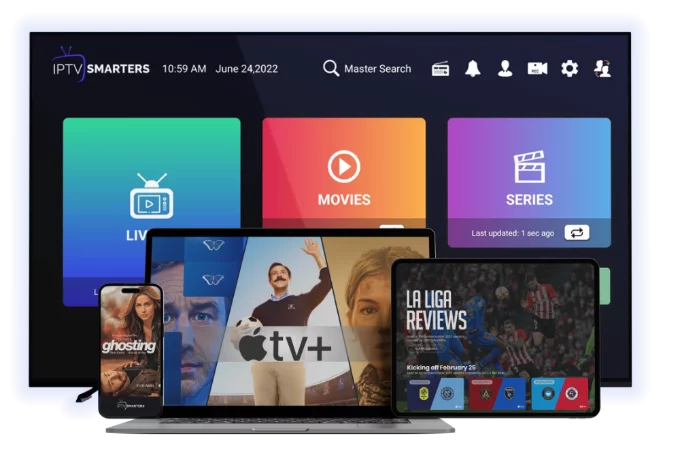
3. Install the app (IPTV Smarters, TiviMate or the provider's own app) on your TV or Firestick
4. Test your favourite channels on the trial before committing
5. Cancel cable once you're satisfied — most providers give a refund window if it doesn't work for you
Frequently asked questions
Yes — typically 70–85% cheaper. A cable package with sports and movies costs £75–£110 / \$120–\$180 monthly. A comparable IPTV subscription runs £8–£20 / \$10–\$25, with no contract and no equipment fees.
On a stable broadband connection of 25 Mbps or more, IPTV streams in 4K with quality indistinguishable from cable. Below 15 Mbps, you may see buffering on HD streams.
No. Most IPTV providers offer a free trial, so you can run both side-by-side for a day or two and compare before cancelling cable.
Yes, IPTV from a licensed provider is fully legal in both countries. Avoid services that promise premium sports for unrealistic prices — those are usually unlicensed and illegal to use.
15 Mbps for HD, 25 Mbps for 4K, and 50+ Mbps if multiple devices are streaming at once. Wired ethernet is more reliable than Wi-Fi for live channels.
#iptv
#cable tv
#cord cutting
#streaming
#comparison